
Networking
Structured Cabling for Reliable Network Performance
Mar
Structured Cabling and Networking
Reliable connectivity is essential in today’s digital business environment. Structured Cabling plays a key role in providing the fast, stable networks that organizations rely on to support communication, cloud computing, data storage, security, and daily operations.
Structured Cabling and networking are critical to IT infrastructure. A well-designed cabling system forms the backbone of operations, ensuring efficient data flow between devices, systems, and users.
Whether in corporate offices, hospitals, hotels, schools, or data centers, structured cabling provides the foundation for reliable, scalable, and high-performance networks.
What is Structured Cabling?
Structured cabling refers to a standardized system of cables, connectors, hardware, and infrastructure that supports an organization’s network communication.
Instead of installing separate cables for different systems, structured cabling integrates multiple services into a single, organized infrastructure that supports:
- Data networks
- Voice communication (VoIP)
- CCTV surveillance systems
- Access control systems
- Wireless networks (Wi-Fi)
Why Structured Cabling is Important for Businesses
A poorly organized network cabling system can result in slow connectivity, frequent downtime, and difficulties during system upgrades.
Structured cabling solves these challenges by providing a well-planned and scalable network infrastructure that supports both current and future technologies.
Key reasons businesses invest in structured cabling include:
- Reliable Network Performance – proper cabling reduces interference and ensures stable data transmission.
- Scalability for Business Growth – as businesses expand, additional devices and systems can easily be integrated without rebuilding the network.
- Simplified Maintenance- an organized cabling system makes troubleshooting faster and reduces network downtime.
- Cost Efficiency – Although it requires proper planning, structured cabling significantly reduces long-term maintenance costs.
Key Components of a Structured Cabling System
The system is composed of several essential elements that work together to deliver reliable network connectivity.
Horizontal Cabling
Horizontal cabling connects telecommunications rooms to individual workstations or network outlets throughout the building.
Common cables used include:
- Cat5e Ethernet cables
- Cat6 Ethernet cables
- Cat6A high-performance cables
Backbone Cabling
Backbone cabling connects different floors, departments, or buildings to the main network distribution point.
Fiber optic cables are commonly used for backbone connections because they provide high bandwidth and long-distance transmission capabilities.
Patch Panels
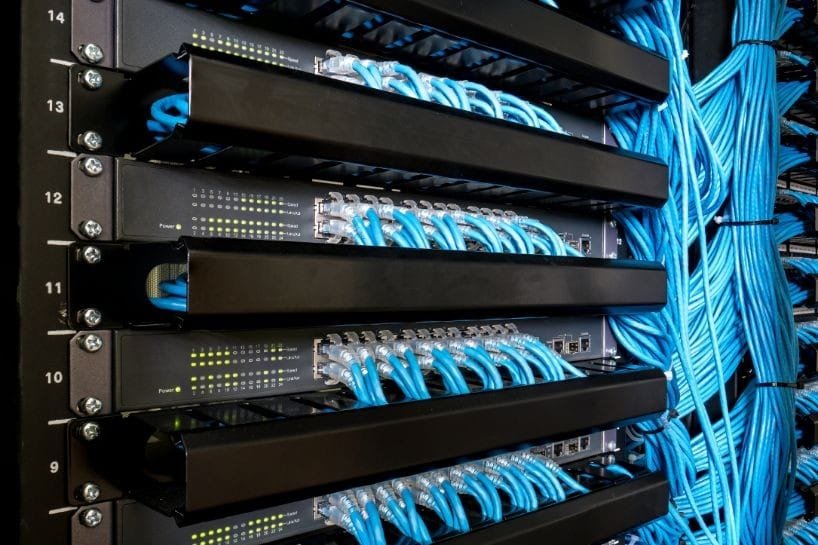
Patch panels serve as central termination points where all network cables are organized and connected to switches or routers. They allow network administrators to manage connections easily without changing the physical cabling.
Network Racks and Cabinets
Network racks house important networking equipment such as:
- Network switches
- Routers
- Patch panels
- Servers
- Power distribution units
Switches and Routers
Switches connect multiple devices within the network and allow them to communicate efficiently.
Routers connect the internal network to external networks such as the internet. Together, these devices control data traffic and maintain network stability.
Types of Cabling Used in Structured Networks
Copper Ethernet Cabling
Copper cables are widely used in office networks due to their affordability and reliability.
Common types include:
- Cat5e
- Cat6
- Cat6A
Benefits of Structured Cabling for Organizations
- Faster Data Transmission – A structured network supports higher bandwidth and faster communication between devices.
- Improved Network Organization – Clearly labeled cables and centralized connections simplify network management.
- Reduced Downtime – Well-installed cabling reduces connection failures and improves reliability.
- Flexibility for Technology Upgrades- Structured cabling supports emerging technologies and future network upgrades.
- Better Safety and Cable Management – Proper cable routing prevents hazards and protects network infrastructure.
Applications of Structured Cabling
This supports a wide range of systems used in modern organizations.
Common applications include:
- Corporate IT networks
- CCTV surveillance systems
- Wireless access points and Wi-Fi networks
- Access control and security systems
- VoIP telephone systems
- Data centers and server rooms
- Smart building automation systems
Structured Cabling Installation Best Practices
To ensure long-term reliability, structured cabling installations should follow industry standards and best practices.
These include:
- Proper network design and planning
- Use of certified cables and connectors
- Clear labeling of cables and ports
- Installation of cable trays and conduits
- Organized cable management in racks
- Proper grounding and electrical protection
Structured Cabling Solutions in Kenya
As businesses across Kenya continue to digitize their operations, the demand for reliable networking infrastructure is increasing rapidly.
The solutions help organizations in sectors such as:
- Banking and finance
- Healthcare
- Hospitality
- Education
- Government institutions
- Retail and e-commerce
Conclusion
It is the foundation of a reliable and high-performance network infrastructure. A properly designed system ensures that all devices and systems communicate efficiently, reducing downtime and supporting future growth.
For businesses looking to improve connectivity and IT performance, investing in structured cabling is a critical step toward building a strong and scalable network.
